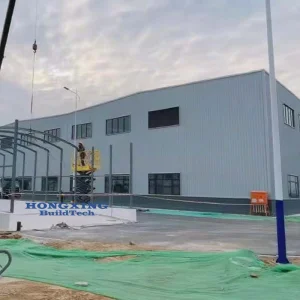
Engineered for immediate site deployment with certified windload resistance, heavy-duty foundations, and local tropical climate adaptations.
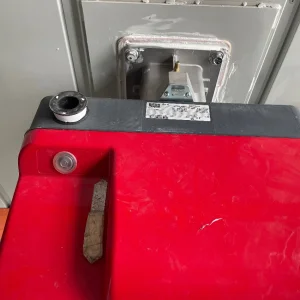
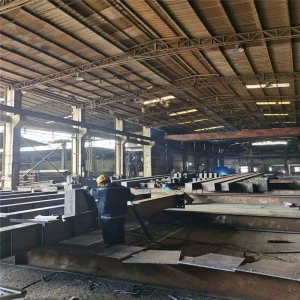
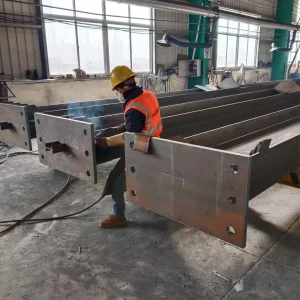
Equatorial Guinea stands as a major economic center within the CEMAC region (Central African Economic and Monetary Community). Historically driven by hydrocarbon extraction near Malabo, Bioko Island, and onshore gas reserves in Rio Muni, the nation is actively executing its national diversification mandate. Through comprehensive structural programs, the government is steering public and private capital toward maritime transport hubs, commercial agro-processing facilities, forestry product processing, and general manufacturing. This economic transition requires high-integrity, rapidly deployable, and low-maintenance buildings. Heavy-duty structural steel industrial plants have emerged as the premier structural framework to enable this massive industrial shift.
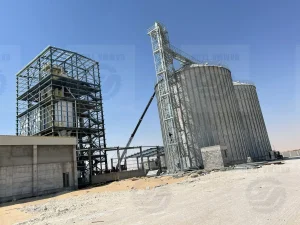
In the industrial zones of Bata, Mbini, and the specialized petrochemical and logistics parks of Malabo II, traditional masonry and concrete construction cannot match the speed, cost-effectiveness, or performance demands of modern operations. Pre-engineered steel buildings (PEBs) provide vast clear spans (up to 60 meters without internal columns), high vertical clearances for overhead heavy crane integration, and modular adaptability. Whether developers are establishing a wood processing center in the Rio Muni mainland or setting up dry-bulk logistics terminals in modern port concessions, heavy-duty steel factories manufactured to strict international standards offer the exact structural performance required.
Equatorial Guinea's unique geographic division—encompassing Bioko Island and the continental Rio Muni region—demands an experienced exporter capable of handling complex logistics and delivering high-performance materials designed for coastal environments.
The coastal geography of Equatorial Guinea exposes industrial buildings to extreme atmospheric conditions. High annual rainfall (often exceeding 2,000 mm to 3,000 mm), constant relative humidity averaging above 80%, and ambient salt mist from the Gulf of Guinea create an atmospheric corrosion classification of C5-M (Marine/Coastal) under ISO 12944. Standard paint systems fail within a few years in these conditions, exposing structures to dangerous rust, load capacity loss, and structural failure.
To combat this harsh environment, PYO Homes specializes in advanced anti-corrosion treatments for all steel structural elements exported to Equatorial Guinea.
All secondary structural components (C/Z purlins, girts, and bracing systems) undergo hot-dip galvanization conforming to ISO 1461, with a minimum coating thickness of 85 microns, yielding 30+ years of maintenance-free service.
Primary steel members (heavy-duty H-beams, structural columns, and trusses) receive a multi-stage duplex coating system consisting of an inorganic zinc-rich primer, an epoxy micaceous iron oxide barrier coat, and an aliphatic polyurethane topcoat.
Engineering design incorporates tropical wind load calculations up to 45 m/s (162 km/h) based on Eurocode 1 (EN 1991-1-4) or ASCE 7-10 standards, providing high safety margins during violent equatorial storms and seasonal monsoon winds.
By combining hot-dip galvanization with modern paint technologies, PYO Homes ensures that every steel factory, warehouse, and refinery support structure remains structurally sound for decades, minimizing total life-cycle costs for industrial operators in Equatorial Guinea.
Delivering robust structural systems designed to withstand harsh West-Central African conditions.
For buyers in Malabo and Bata, importing heavy industrial equipment requires reliable logistics coordination. Delays at ports of entry, customs documentation errors, or cargo damage during maritime transit can quickly halt project schedules. PYO Homes maintains a dedicated international logistics division specializing in African port delivery, ensuring all structural steel shipments arrive safely and on time.
Our steel structures are precision-cut, pre-welded, and pre-drilled in our state-of-the-art Chinese manufacturing facilities. Before shipping, each component is hot-stamped with a unique identification code matching the installation drawings. This ensures efficient assembly on site.
For marine transport, components are bundled and secured using high-strength steel strapping and heavy-duty shrink-wrap to prevent damage from salt mist during ocean transit. Heavy primary structural columns and trusses are loaded directly into open-top containers or flat racks, while secondary components and fasteners are packed in seaworthy steel crates. We arrange direct shipping routes to the Port of Bata and Port of Malabo, working with leading shipping lines to provide reliable transit schedules.
Engineering standards in Equatorial Guinea are influenced by European codes, local regulations, and international best practices. Our engineering team designs structures using advanced modeling software (Tekla Structures, SAP2000, and STAAD.Pro) to ensure full compliance with the following international structural codes:
By strictly adhering to these international standards, we ensure that every structure satisfies municipal engineering reviews, insurance underwriters, and global safety standards, making them highly bankable assets for international project financing.
The coastal soils of Equatorial Guinea, particularly near Malabo's volcanic topography and Bata's sandy clay shores, require specialized foundation designs. Steel buildings are much lighter than concrete alternatives, reducing the size, depth, and cost of concrete pad or pile foundations. Our structural engineers design the anchor bolt templates and foundation loadings to match local geotechnical reports, ensuring stable load distribution.
While our fabrication occurs in China, we support local contractors throughout the installation process. We supply a complete 3D digital model (BIM) and detailed step-by-step erection manuals. For complex industrial plants, we can deploy experienced site supervisors to Equatorial Guinea to guide local crews, verify bolt torque, check alignment tolerances, and ensure safe hoisting and assembly of primary steel frames.
As Equatorial Guinea transitions its industry to meet international ESG (Environmental, Social, and Governance) targets, industrial plants must minimize their environmental impact. Steel is 100% recyclable, and our manufacturing processes minimize material waste. In addition, our structural systems are engineered to support the installation of roof-mounted solar photovoltaic (PV) systems, allowing plants to offset energy costs with clean solar energy.
By combining thermal insulation systems (polyurethane sandwich panels) with rainwater harvesting roof profiles, our designs reduce energy consumption and manage water resources sustainably. This matches the needs of green-conscious operators looking to establish long-term, low-emission facilities in the region.
Fully integrated heavy-duty steel systems, purification units, and processing equipment designed for local operations.
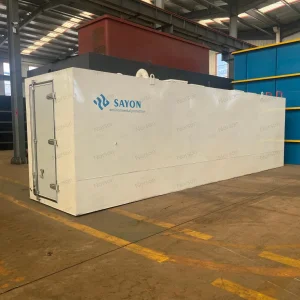
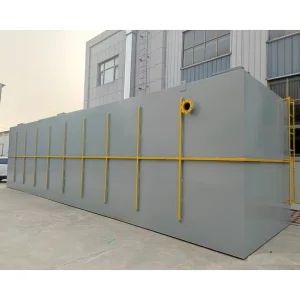
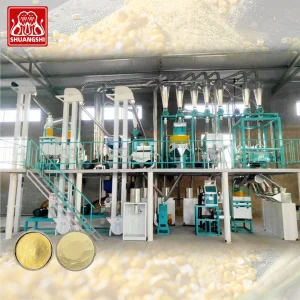
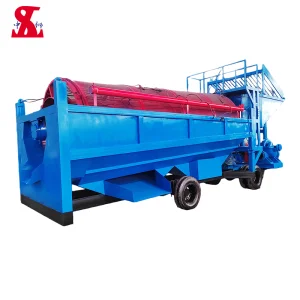
Technical details for engineering consultants, procurement managers, and government developers.
 PYO Homes